
Montgomery County Active Warrants Explained
An active warrant is simply an order that has been signed and entered but not yet served, recalled, or cleared. The phrase promises no public listing. Maryland keeps no statewide warrant table for the public. Montgomery County does not publish the roster its agencies hold internally. That gap surprises people who expect a searchable list, and what the county offers instead is confirmation by phone plus a case summary online. Those two channels answer to different courts, so know which one signed your order before you dial.
Why Montgomery County Has No Warrant Feed
Both warrant offices in Montgomery County publish service pages, not lookup lists. The county police page explains how to confirm a warrant and turn yourself in: it gives the detention center address, the weekday intake hours, the ID to bring, and the district stations that take walk-in surrenders around the clock. The sheriff's page covers a different docket. Instead of names, it lists the warrant types the office handles, and the sheriff's listed categories spell out the split plainly: assigned Circuit warrants, District civil bench warrants, domestic violence warrants, child support, and fugitive work. That list is the clearest map of which office owns which warrant in Montgomery County.
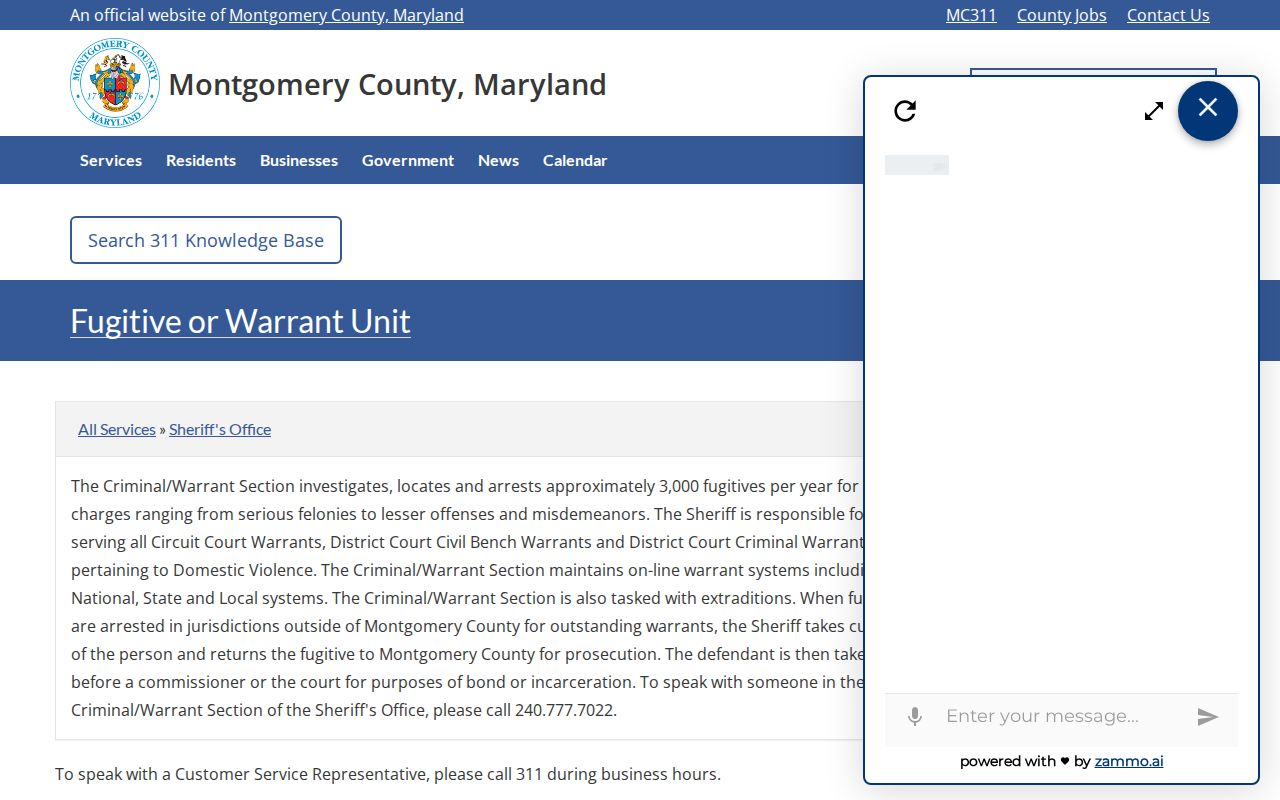
Check those categories before you call. In Montgomery County, a District traffic warrant and a Circuit felony warrant go to different units entirely.
How Montgomery County Tracks Active Warrants
With no public list, what matters is how the internal record behaves behind the scenes. An agency enters the warrant, validates it against state and national systems, and closes it out once it is served, recalled, or otherwise satisfied. The public docket summary can lag behind or stay silent on all of that. So the fastest status check for a District criminal or traffic matter is the phone line itself, through the Montgomery County Sheriff warrant contact. The clerk on that line can tell you what no case search can: whether the order is still open right now.
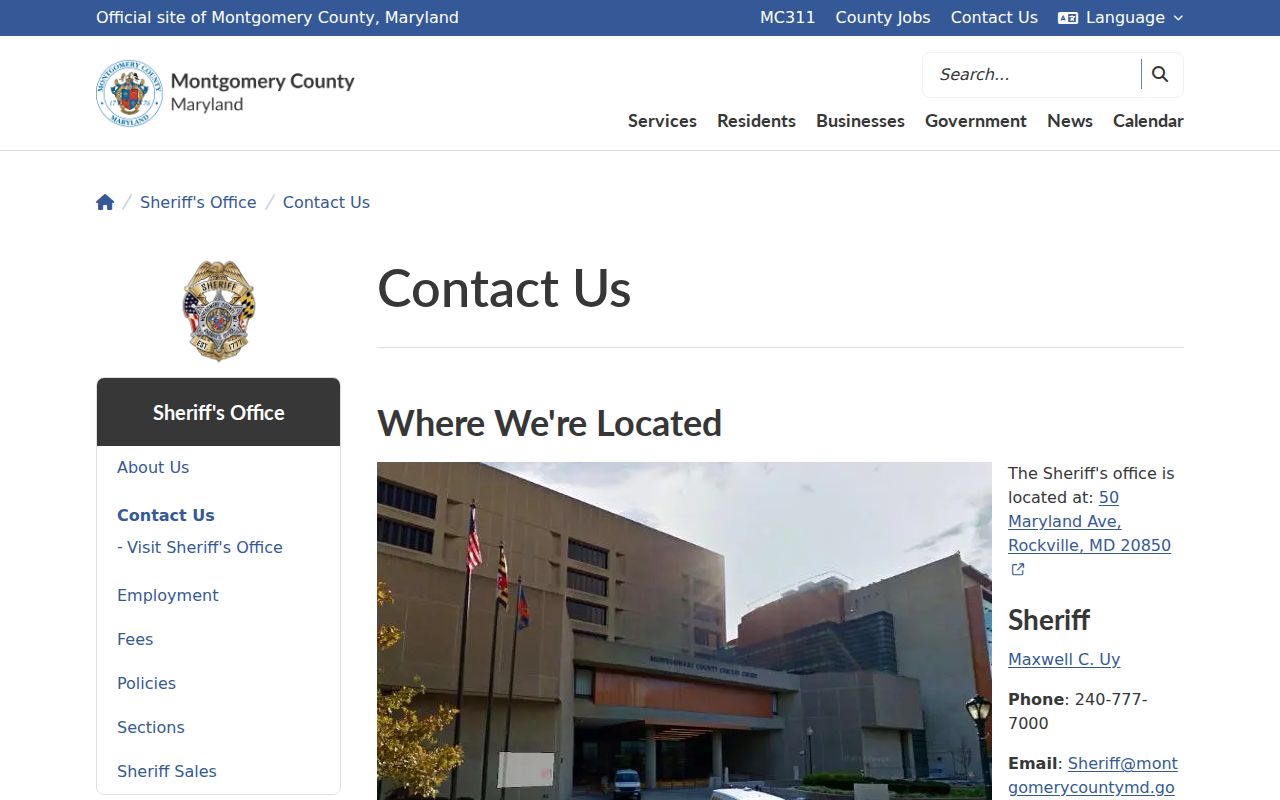
Have the full legal name and date of birth in hand. Montgomery County agencies match on those two fields before confirming anything.
Note: Case Search shows the case rather than the warrant, so a docket can read as pending while the warrant has already been served or recalled.
Montgomery County Warrant Systems and Case Search
Two very different tools get confused here, and Montgomery County readers lose time over it. Case Search is public, free, and built straight from court dockets. The platforms that carry live warrant status share none of those traits. METERS, NCIC, and E*Justice are restricted entry and validation systems, and county police keep a separate warrant database for operational use. The takeaway is simple. A public search can place a case and show a charge. Only an agency can confirm whether a warrant is active this minute. So treat any online claim about warrant status, even on a private site, as a lead to verify rather than an answer in itself.
Inside an Active Warrant Record
Inside the agency record, a warrant entry holds the identifiers tying it to a case and an officer. Some fields are sensitive. Montgomery County publishes none of them.
| Warrant or Control Number | The agency tracking number, in a format such as W-2024-000456 |
|---|---|
| Warrant Type | Arrest, bench or FTA, preset bench, summons, or body attachment |
| Charge | The offense shown on the charging document or court order |
| Issuing Court | District Court or the Circuit Court for Montgomery County |
| Service Status | Unserved, served, recalled, or cleared, with dates |
| Entering Agency | The unit that entered the record and the unit assigned to serve it |
Montgomery County Warrant Service Counts
Published figures measure work done, not warrants still open. A big service count shows one thing: how busy a Montgomery County warrant unit has been. It says nothing about the orders outstanding today.
Note: No current countywide count of open warrants by type, age, or city has been published.
Warrant Roundups and Most-Wanted Lists
Montgomery County runs no countywide warrant roundup and no amnesty week, and it posts no full public most-wanted roster. What it does operate is a tip program. That is the official channel for anyone with information about a wanted person.
Key Point: Crime Solvers takes anonymous tips by phone, web, and app, and offers rewards, but it is not a warrant lookup: Montgomery County Crime Solvers.
Warrant status comes from the police warrant line or the sheriff, never from a tip program.
Crime Solvers and Montgomery County Warrant Tips
Crime Solvers is the tip line that feeds what the public knows to Montgomery County investigators. The setup is simple. You can call, fill out a web form, or use the mobile app, and rewards are paid when a tip produces an outcome. No name is ever required. Two limits matter, though. The program will not confirm whether a warrant is active, and it does not publish any list of the people it is seeking. To learn if a warrant is truly open, contact the agency that holds it, such as the sheriff or the issuing court.
When Your Name Is on the Warrant List
Finding your own name on a warrant list is frightening, but the answers are procedural. The Montgomery County warrant records overview lays out the main options: surrender voluntarily, post bond, or ask the issuing court to recall the warrant. A lawyer can put those steps in the right order and talk to the prosecutor first. That way, the process runs on your schedule instead of at the moment of an arrest.
Important: Talk to a defense attorney before turning yourself in, and never wait for a traffic stop to settle the question of whether a warrant is open.
One Montgomery County Warrant, Two Lists
A Montgomery County case can show up in one docket and not the other. That rarely means the record is wrong. Usually the search was just partial. A District Court traffic matter and a Circuit Court criminal case sit in different systems, with different clerks and different agencies handling them. So check both levels on purpose. Note what the first search produced. If a case appears in one place and not the other, the clerk's office can explain which court holds it and whether the order behind it is still open.